Lee Fisher From Public Service to the College Presidency


 RSS Feed
Welcome to Small College America, a podcast dedicated to exploring the role and value of small colleges in the higher education landscape. I'm Kent Barnds, Executive Vice President of Augustana College, and I'm joined by my co-host Dean Hoke, Co-Founder of Edu Alliance Group.
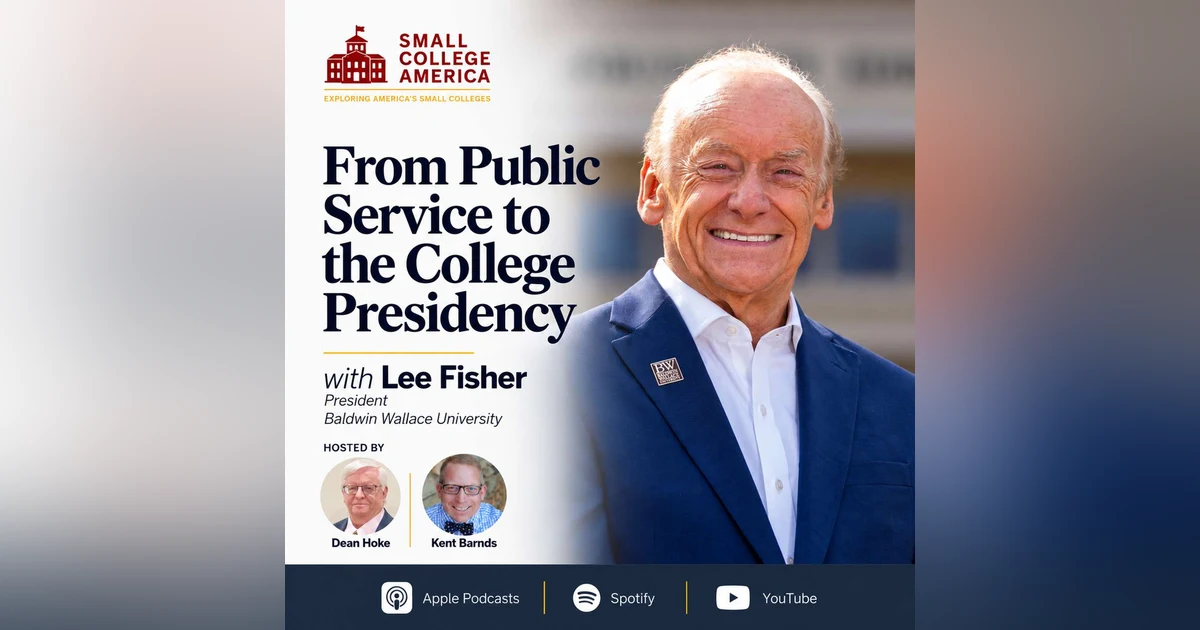
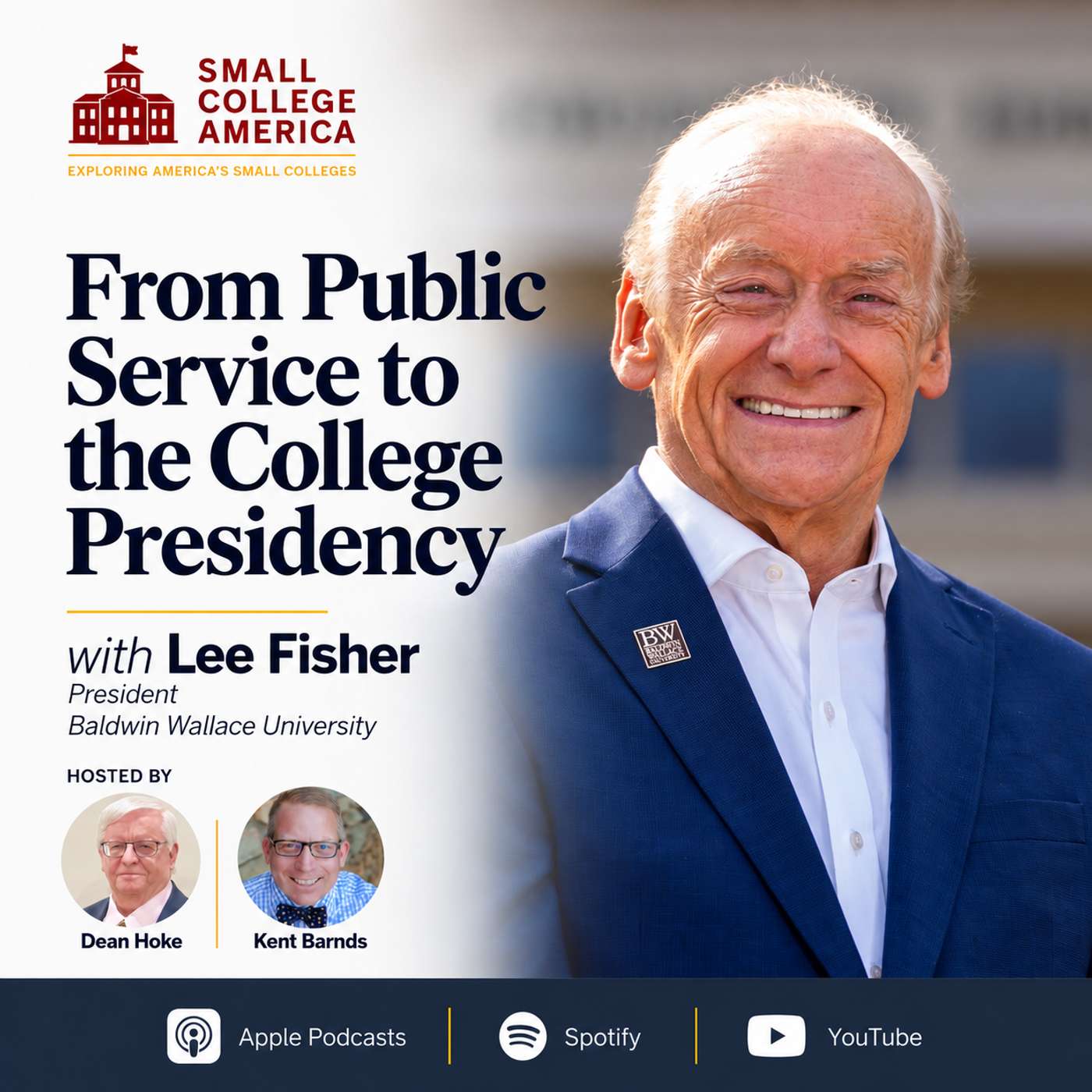
Dean: Today, we're joined by Lee Fisher, the 10th president of Baldwin Wallace University in Berea, Ohio. Lee became president in July 2025 after serving nine years as Dean of Cleveland State University's College of Law, where he helped lead a substantial turnaround in enrollment and financial performance. Before entering higher education leadership, Lee had an extensive career in public service, including serving in the Ohio legislature, as Ohio Attorney General, and as Lieutenant Governor under Governor Ted Strickland. He has also held leadership positions in the nonprofit sector. And Lee. Going back in time, I read in a 1998 CBS News profile that your first election victory came in 1962, when you were elected president of your elementary school when you were 11 years old.
INTERVIEW QUESTIONS
Kent: Question 1: Baldwin Wallace and Your Journey to the Presidency. Lee, to begin, tell our listeners a little about Baldwin Wallace University and its community in Berea, Ohio. You've had an unusual career spanning politics, law, nonprofit leadership, and higher education. What attracted you to becoming president of Baldwin Wallace?
Dean: Question 2: Enrollment and Institutional Sustainability. Baldwin Wallace, like many private 4-year institutions, especially in the Midwest and East, has experienced enrollment decline over the past decade and is currently at 2618 in fall 2026. As you look ahead, are you working to return to earlier enrollment levels, or do you envision a different long-term size and financial model for Baldwin Wallace?
Probable Follow-up: Many smaller private colleges are exploring partnerships, shared services, and even mergers to strengthen their long-term sustainability. What role do you see these forms of institutional collaboration playing in Baldwin Wallace's future?
Kent: Question 3 — Academic Innovation and Institutional Mission. Baldwin Wallace has made some difficult decisions in recent years, including eliminating academic programs and faculty positions. At the same time, the university has introduced programs in areas such as business analytics and mental health counseling that respond to student interests and workforce needs.
How do you decide which academic programs to invest in and which to discontinue, while preserving the mission and traditions of a university founded more than 180 years ago?
Dean: Question 4 — From Public Service to University Leadership. Lee, you haven't followed the traditional path to becoming a university president. You've spent much of your career in public service, including serving in the Ohio legislature, as Attorney General, and as Lieutenant Governor. You've also led nonprofit organizations and a law school.
How does leading a university compare with holding public office, and what lessons about leadership from your years in government have been most useful in your role as president of Baldwin Wallace?
Kent: Question 5: Athletics and Enrollment Strategy. Lee, athletics is an important part of Baldwin Wallace, with nearly half of your entering students participating in intercollegiate sports. We’re hosting a discussion on athletics at small colleges next month, and one issue we’ll explore is the growing importance of athletics to enrollment. How important is athletics to Baldwin Wallace’s recruitment and financial sustainability, and how do you evaluate its contribution?
Dean: Question 6: Five Years From Now — Baldwin Wallace and Small Colleges. Lee, let's close by looking ahead five years. As you think about Baldwin Wallace and other small private colleges in 2031, what do you believe these institutions will need to do differently to remain academically strong and financially sustainable?
Closing
Kent: Lee, thank you for joining us and for helping us better understand Baldwin Wallace University, your experience in institutional leadership, and the opportunities and challenges facing small private universities. We appreciate your perspective and your time.
For those listening or viewing, visit www.smallcollegeamerica.net to learn more about Small College America, find past and upcoming episodes, leave comments, and subscribe. On behalf of our guest, President Lee Fisher, my co-host Dean Hoke, and me, thank you for joining us.


