
The Changing Role of the Small College Provost


 RSS Feed
Kent Barnds: Welcome to Small College America, a podcast dedicated to exploring the role and value of small colleges in the higher education landscape. I'm Kent Barnds, Executive Vice President of Augustana College, and I’m joined by my co-host Dean Hoke, Co-Founder of Edu Alliance Group.
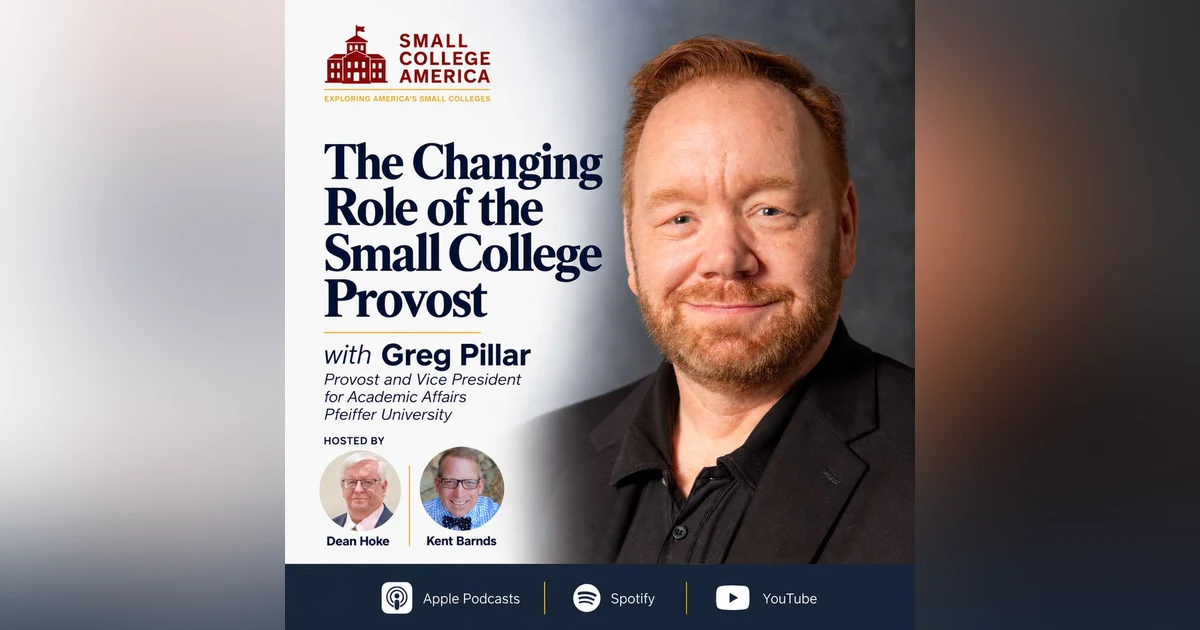
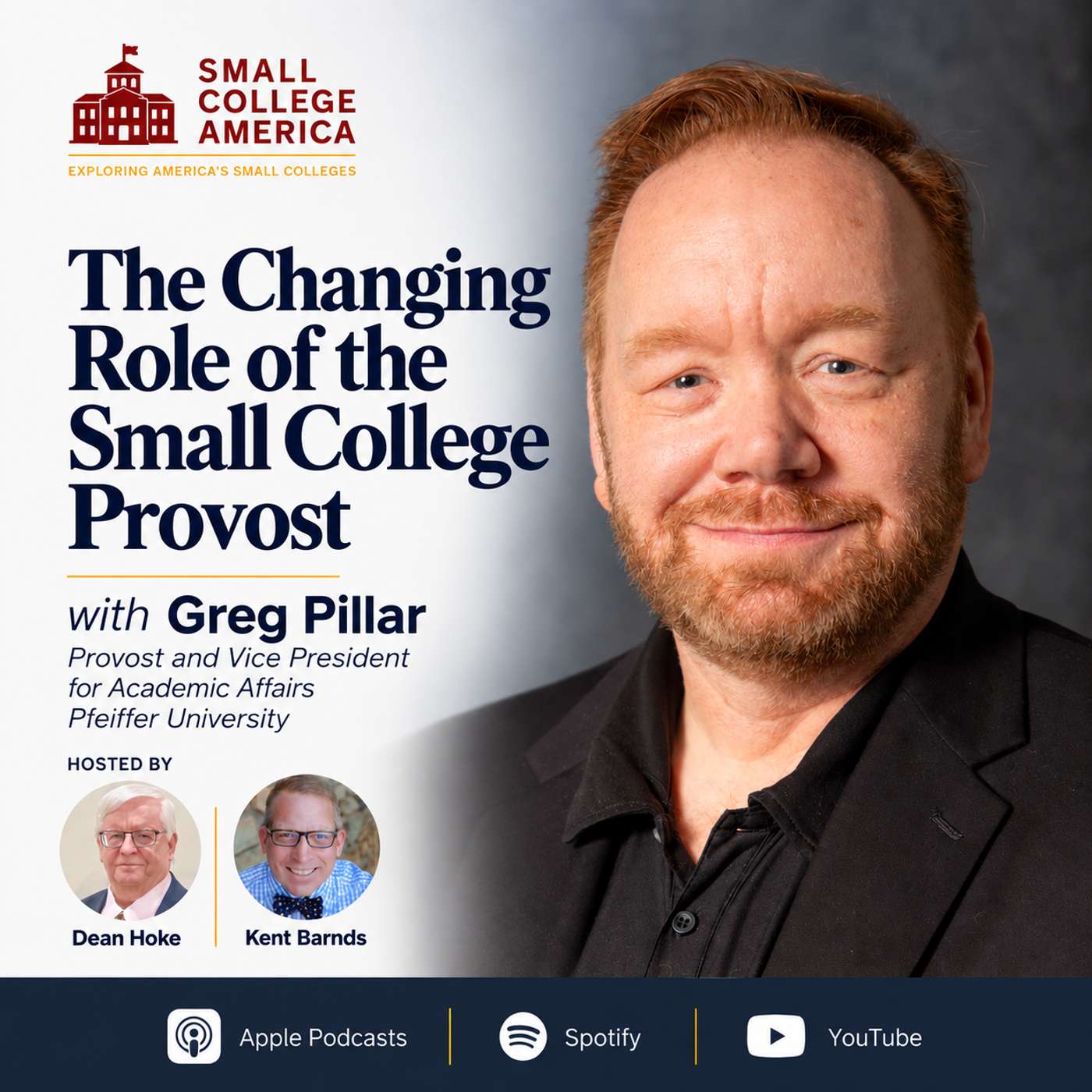
Dean: Today on Small College America, Kent and I are joined by Dr. Greg Piller, Provost and Vice President for Academic Affairs at Pfeiffer University in North Carolina. Greg joined Pfeiffer in August and his career has unfolded largely within small, private higher education, progressing from professor and department chair to honors director, dean, associate provost, and chief academic officer. Before joining Pfeiffer, he served as Associate Provost at Gardner-Webb University and spent more than 18 years as a faculty member and academic leader at Queens University of Charlotte.
An environmental chemist by training, Greg brings a scientist’s curiosity to questions of academic leadership, institutional change, and the future of small colleges. His work focuses on connecting institutional mission with the needs of today’s learners while strengthening academic quality, workforce relevance, and long-term sustainability. He also writes and speaks nationally about higher education leadership, accreditation, academic operations, and institutional innovation.
Greg, I found something interesting in your background. Your doctoral research at the University of Georgia examined what happens to TNT when it gets into soil. So, you've gone from studying explosives to becoming a provost—a job that, I suspect, can be pretty explosive at times!
Kent: QUESTION 1 — Greg, your academic career began in environmental chemistry as a faculty member and researcher. Today, you're the chief academic officer of a university. Take us through that journey. How has your background as a scientist and faculty member shaped the way you approach academic leadership?
Follow-up: Was there a point when you realized that administration was where you could have the greatest impact?
Dean: QUESTION 2 — Greg, you've spent years moving through academic leadership positions, but this is your first appointment as a provost. Now that you're sitting in that chair, what are you seeing about the role that you couldn't fully appreciate when you were preparing for it?
Greg, What has surprised you most about being the person ultimately responsible for the academic side of the university?
Kent: QUESTION 3 — Greg, let's talk about Pfeiffer. You've spent much of your career at larger institutions, and now you've chosen to take your first provost position at a university with fewer than 1,000 students.
What attracted you to Pfeiffer, and now that you're there, what opportunities do you see in leading the academic side of a university of this size?
Dean: QUESTION 4 — Greg, accreditation has been an important part of your work for years. You've served as a SACSCOC liaison, and you've discussed accreditation extensively through your podcasting. But now you're looking at it from a different perspective—as a provost with responsibility for much of the academic and accreditation work of an institution.
Has sitting in the provost's chair changed the way you think about accreditation and the role it should play in strengthening an institution?
Follow-up: When an institution is going through accreditation renewal—or dealing with other accreditation concerns—what role does the provost play in bringing faculty, administrators, and the board together?
Kent: QUESTION 5 — Greg, the provost's role has traditionally centered on academic quality, faculty, and the curriculum. But today, particularly at a small university, it's difficult to separate academics from enrollment, retention, finances, technology, and the changing expectations of students and employers. Is the role of the provost fundamentally changing, and what does a successful provost at a small college need to understand today that perhaps wasn't as important 5 or 10 years ago?
Dean: QUESTION 6 — Greg, our last question concerns the future. It's five years from now. What do you think will be fundamentally different about successful small colleges and universities compared with today?
Closing
Kent: Greg, thank you for joining us and for sharing your perspective as a first-time provost. You've given us a thoughtful look at academic leadership, the opportunities and challenges of leading a small university, and how the provost role continues to evolve. We appreciate your insights and your time, and we wish you all the best as you begin this new chapter at Pfeiffer University.
For those listening or viewing, visit www.smallcollegeamerica.net to learn more about Small College America, find past and upcoming episodes, leave comments, and subscribe. On behalf of our guest, Greg Pillar, my co-host, Dean Hoke, and me, thank you for joining us.


