Dr. Michael Sorrell and The Reinvention of Paul Quinn College
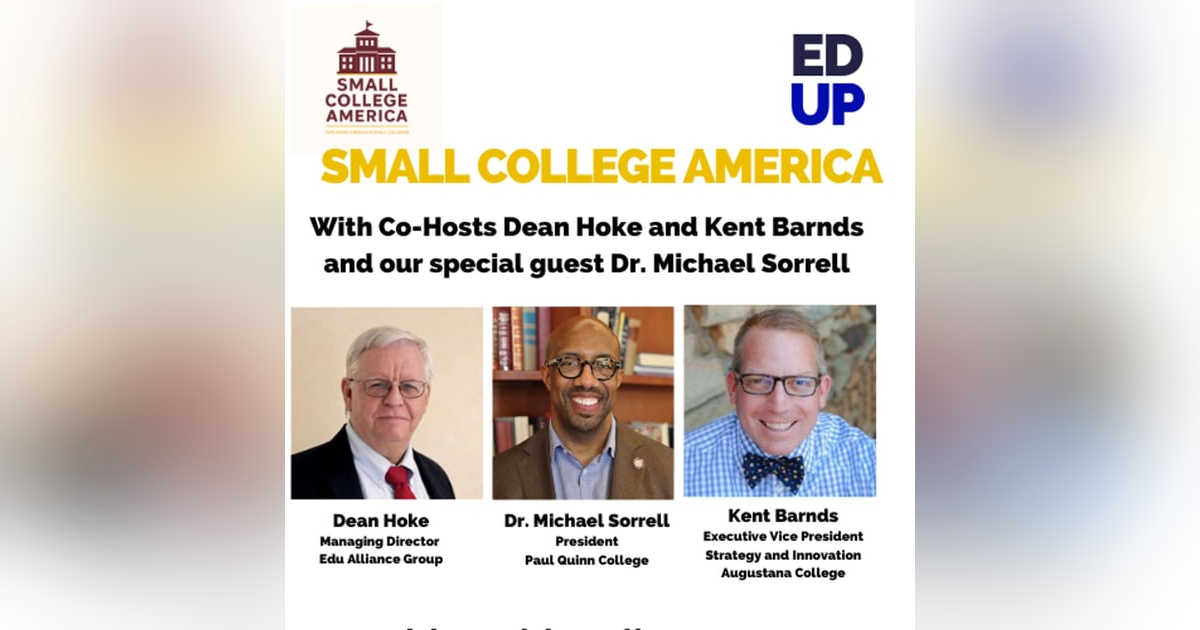


Kent Barnds: Welcome to Small College America, a podcast dedicated to exploring the role and value of small colleges in higher education. I'm Kent Barnds, and I’m joined by my co-host, Dean Hoke.
Dean Hoke: Our guest today is Michael Sorrell, President of Paul Quinn College in Dallas, Texas, which has an enrollment of about 650 students. Michael is the longest-serving leader in the institution’s history. Since taking office in 2007, he has led one of higher education’s most remarkable turnarounds—transforming Paul Quinn into a nationally recognized model for innovation, community engagement, and student success. His leadership includes launching the New Urban College Model and converting the campus football field into a thriving urban farm.
Michael is a graduate of Oberlin College and Duke University, and his Ed.D. from the University of Pennsylvania, though he often says his most important education has come from listening closely to students and the surrounding Dallas community. He has served as the co-chair for the Aspen Prize and a former trustee for the American Council of Education
Michael is married and has two children. Michael is known for being remarkably accessible on campus, frequently walking the grounds, checking in with students, and personally mentoring emerging leaders.
Michael, a pleasure to have you on Small College America.
Kent – Q1: The Turnaround
When you became president of Paul Quinn College in 2007, the institution was facing serious challenges. Looking back, what were the first decisions you made that truly changed the trajectory of the college?
- Was there a moment early on when you realized just how difficult the situation really was?
Dean – Q2: Rethinking the Small College Model
Paul Quinn has become nationally known for what you call the “New Urban College Model.” What does that model mean, and why did you believe the traditional approach needed to change?
Kent – Q3: The Football Field Decision
One of your most talked-about decisions was ending the football program and turning the field into the WE Over Me Farm. What message were you trying to send with that decision?
Dean – Q4 Leadership and Culture
You’ve led Paul Quinn longer than any president in its history. Over that time, how have you worked to build a culture that supports innovation and accountability?
- What leadership lesson has been most important during your time as president?
Kent – Q5: The Role of HBCUs and Small Colleges
Paul Quinn is both a historically Black college and a small private institution. In today’s higher education landscape, what unique role do HBCUs and small colleges play in expanding opportunity and social mobility?
- What do policymakers and foundations need to understand better?
Dean – Q6 Looking Ahead
As you look ahead to the next decade, what do you see as the biggest opportunities and the biggest risks for small colleges in America?
- Do you think the traditional small college model will look very different ten years from now?
Closing
Kent: Michael, thank you for joining us today and for sharing the remarkable story of Paul Quinn College. Your leadership shows how a small college can reinvent itself, stay true to its mission, and make a meaningful difference for students and the community it serves.
For those listening or watching, you can learn more about Small College America at www.smallcollegeamerica.net, where you’ll find upcoming episodes, contact information, and ways to suggest future topics. We also encourage you to subscribe on YouTube, Apple Podcasts, Spotify, or your favorite podcast platform.
This episode of Small College America is made possible with underwriting support from Edu Alliance Group, a higher education consulting firm that champions small colleges and the communities they serve.
On behalf of our guest, Dr. Michael Sorrell, my co-host Dean Hoke, and I, thank you for joining us.


